

The digital revolution has transformed how we experience the world, erasing borders and bringing the most remote corners of the globe directly to our screens. Today, a buyer sitting in an apartment in Bangalore, London, or New York can admire and purchase a pure Pashmina shawl woven on a traditional wooden loom in the heart of Srinagar. The internet has made building a culturally rich, globally sourced home or wardrobe easier than ever before.
However, this unprecedented accessibility comes with a significant caveat. As the global demand for handmade traditional crafts has skyrocketed, the digital marketplace has unfortunately been flooded with middlemen, mass-produced factory replicas, and counterfeit goods masking as authentic artistry. When you are shopping for luxury heritage items, the line between a genuine masterpiece and a clever imitation can be incredibly blurry.
How do you navigate this landscape? How can you ensure that your investment is secure and that the product arriving at your doorstep is a true representation of the Kashmir Valley’s legendary craftsmanship? In this comprehensive buyer’s guide, we will walk you through the red flags of fake craftsmanship, the profound impact of buying authentic, and exactly what to look for in a trusted online shopping platform.
Section 1: The Red Flags of Fake Craftsmanship
The first step in secure online shopping in India, especially for luxury ethnic goods, is developing a discerning eye. While it is harder to inspect an item through a screen than it is in a physical bazaar, there are several glaring red flags that often give away a counterfeit product.
1. Prices That Are “Too Good to Be True”
Authentic Kashmiri products—whether it is a hand-spun Pashmina shawl, a hand-knotted silk carpet, or a finely embroidered Sozni Pheran—are incredibly labor-intensive. A single master artisan may spend months, or even years, on one piece. The raw materials, such as the ultra-fine undercoat of the Changthangi goat, are rare and expensive. Therefore, if you see an online store selling a “100% Pure Kashmiri Pashmina” for ₹1,500, it is a guaranteed fake. At that price point, you are likely purchasing a factory-made viscose, acrylic, or synthetic wool blend. Genuine art commands a fair price that reflects the artisan’s time and skill.
2. The Illusion of “Perfect” Symmetry
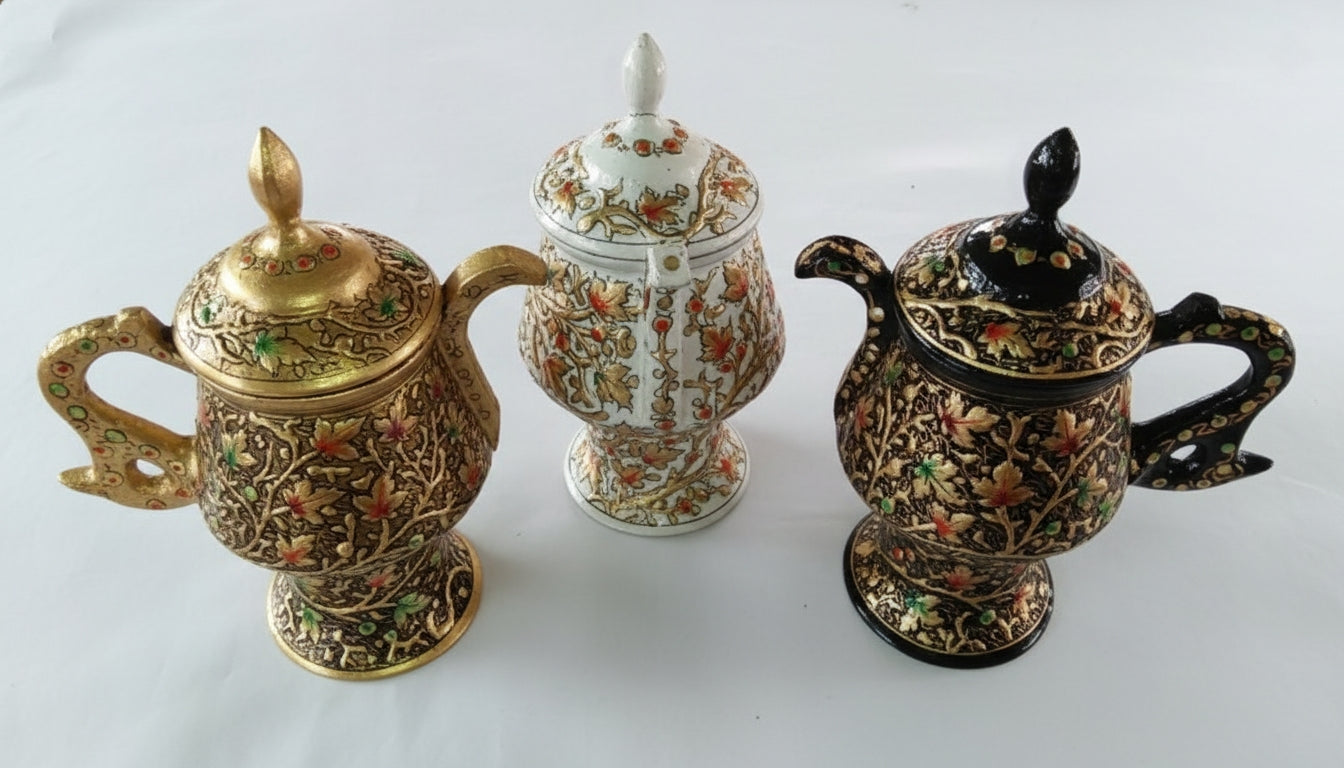
In the world of authentic handmade traditional crafts, absolute perfection is a myth. Human hands, no matter how skilled, do not operate with the mathematical precision of a laser-guided machine. If you are examining high-resolution photos of a Papier-Mâché box or an Aari embroidered jacket, look for slight, beautiful irregularities. A minor variation in the tension of a thread, a tiny difference in the size of painted flower petals, or a slight unevenness in the handloom weave are not defects; they are the ultimate proof of human craftsmanship. Perfect, mirror-image symmetry is the hallmark of machine stamping and computer-aided factory embroidery.
3. Vague Product Descriptions and Lack of Sourcing Transparency
A legitimate seller of authentic Kashmir products will be proud of where their goods come from. They will provide detailed product descriptions that mention the specific type of embroidery (Sozni, Aari, Tilla), the exact fabric composition, and the region of origin. If an e-commerce site uses vague terms like “Kashmiri-style scarf” or “soft winter wool,” they are legally dodging the claim of authenticity. Look for platforms that openly discuss their artisans and the heritage behind the products.
Section 2: The Impact of Supporting Real Artisans
Buying authentic Kashmiri handicrafts online is not just a commercial transaction; it is a vital act of cultural preservation and socio-economic support. The digital commerce and promotion of traditional Kashmiri craftsmanship have the power to sustain entire communities.
When you choose to bypass the mass-produced fakes and invest in a genuine product, your money goes directly toward sustaining the valley’s rural economy. You are empowering the women who sit at the Yinder (traditional spinning wheel) to spin Pashmina yarn. You are ensuring that master weavers, painters, and embroiderers can afford to pass their ancestral knowledge down to the next generation, rather than abandoning their craft for unskilled labor.
Authentic purchases keep centuries-old heritage alive. It transforms your purchase from a mere decorative item into a meaningful artifact that carries the warmth, prayers, and rich history of the artisans who crafted it.
Section 3: What to Look for in a Trusted E-Commerce Platform
Identifying a genuine product is only half the battle; the other half is finding a secure, reliable digital platform to make your purchase. Before you enter your payment details, run the website through this trust checklist.
- Secure Browsing (The Padlock): Never shop on a website that does not have an SSL certificate. Look at the URL bar at the top of your browser; it should start with “https://” and feature a small padlock icon. This ensures that any data you enter is encrypted and cannot be intercepted by third parties.
- Clear and Accessible Policies: A trustworthy e-commerce site will have its Shipping Policy, Return & Refund Policy, and Terms of Service clearly linked, usually in the footer. If a website hides its return policy or makes it impossible to find out how long shipping takes, consider it a major warning sign.
- Verifiable Contact Information: Legitimate businesses are easy to reach. They will display a clear “Contact Us” page with a verifiable physical address, a working customer support email, and often a dedicated phone number or WhatsApp support line. If a website only has an anonymous contact form with no other details, proceed with extreme caution.
- Secure Payment Gateways: Trusted platforms use recognized, third-party payment processors (like Razorpay, Stripe, or official banking gateways). They will never ask you to direct-transfer money to an unverified personal bank account without an automated checkout process.
Section 4: The 3jar.com Promise
At 3jar.com, we recognized the profound disconnect between the magnificent artisans of Kashmir and the global consumers who appreciate their work. We built this platform to bridge that gap, ensuring a transparent, secure, and highly professional shopping experience for every customer who wishes to buy Kashmiri handicrafts online.
When you shop with us, you are not just a customer; you are a patron of the arts. Here is the 3jar.com promise and exactly what you can expect from our customer journey:
1. Uncompromising Authenticity
We do not deal in replicas. Our catalog is meticulously curated, focusing strictly on regional goods and promoting genuine Kashmiri craftsmanship. Whether you are buying a hand-painted Papier-Mâché artifact or a Tilla embroidered Pheran, you are receiving the real deal.
2. Bulletproof Digital Security and Payments
Your online safety is our highest priority. Our entire platform is secured with advanced SSL encryption. We have integrated India’s most trusted payment gateways to offer you maximum flexibility. You can check out securely using your Credit or Debit Card, Net Banking, or opt for seamless, instant transactions via UPI (Google Pay, PhonePe, Paytm). We never store your sensitive financial data.
3. Transparent Order Processing and Invoicing
The moment you click “Pay,” our automated systems take over. You will immediately receive an email and SMS confirming your order, along with a digital tax invoice for your records. Our warehouse team processes and carefully packs your delicate items within 24 to 48 hours to ensure they are protected for the journey ahead.
4. Reliable Delivery to Your Doorstep
We know you are excited to receive your handcrafted goods. Once dispatched, you will be provided with a tracking link to monitor your package’s journey. Standard delivery across India takes between 5 to 14 business days. We charge a flat, transparent delivery fee of ₹150, but as a token of appreciation for supporting the arts, shipping is completely free for all orders exceeding ₹5,000.
Conclusion
Navigating the online marketplace for authentic ethnic goods does not have to be a daunting task. By educating yourself on the hallmarks of genuine craftsmanship, understanding the socio-economic value of your purchase, and shopping strictly on verified, secure platforms, you can curate a beautiful collection of traditional arts with absolute confidence.
A true Kashmiri handicraft is an heirloom—a tangible piece of the valley’s soul. We invite you to explore the exquisite, verified collections at 3jar.com today. Experience the peace of mind that comes with secure online shopping, and bring the authentic heritage of the Himalayas safely into your home.
