

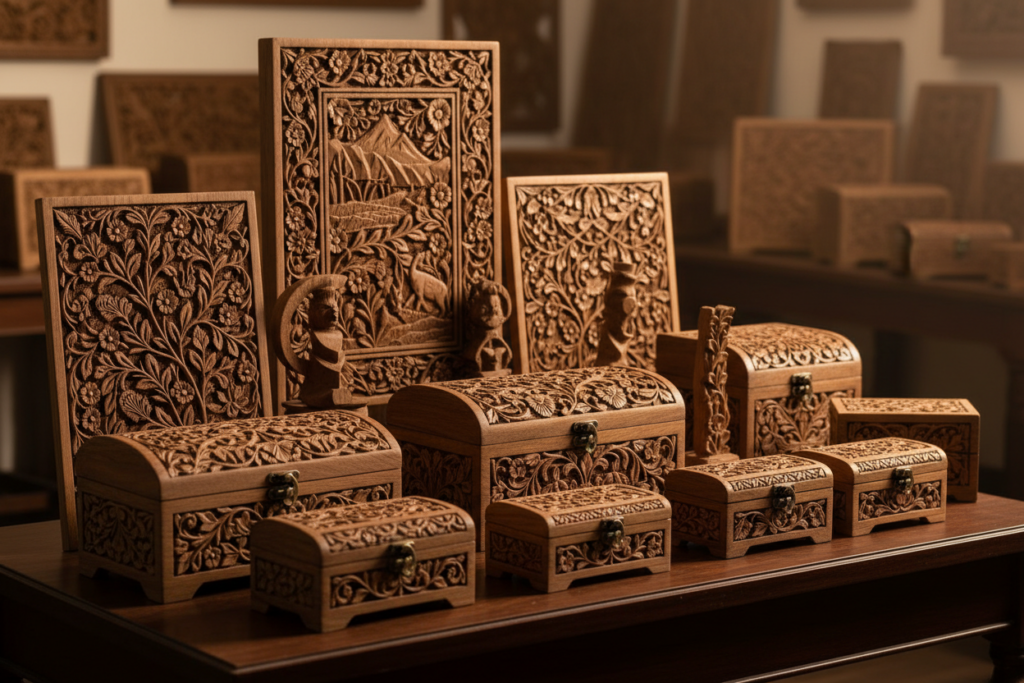
When curating a home that exudes warmth, sophistication, and cultural depth, mass-produced furniture and synthetic decor often fall short. True luxury in interior design is found in pieces that tell a story—pieces shaped not by machines, but by the calloused hands of master artisans over countless hours. In the realm of wooden craftsmanship, few traditions rival the breathtaking detail and rich history of Kashmiri Walnut Wood Carving.
Indigenous to the Kashmir Valley, the majestic Walnut tree (locally known as Doon Kul) provides a timber that is as durable as it is visually striking. For centuries, Kashmiri woodcarvers have transformed this dark, finely-grained wood into royal furniture, intricate jewelry boxes, and magnificent home decor. If you are looking to invest in a piece of authentic Kashmiri craftsmanship to elevate your living space, understanding the artistry behind walnut wood carving is essential.
In this guide, we will explore why Kashmiri walnut wood is globally revered, decode the different styles of traditional carving, and show you how to securely source these heritage pieces through trusted platforms like 3jar.com.
Section 1: The Magic of the Doon Kul (Why Walnut Wood?)
The Kashmir Valley is one of the few places on earth where the walnut tree grows at such high altitudes. This unique geographical advantage gives Kashmiri walnut wood its distinct, highly sought-after characteristics.
The Unique Grain and Color
Unlike standard pine or oak, walnut wood features a dense, close grain that allows for microscopic, razor-sharp carving without the wood chipping or breaking. The color of the wood naturally varies depending on which part of the tree is used:
- The Root: The darkest, most expensive, and most intricately patterned part of the wood. It is reserved for the most premium, high-end artifacts.
- The Trunk: Offers a rich, dark brown hue with prominent, beautiful veining. This is commonly used for furniture and large decorative bowls.
- The Branches: The lightest in color, often bearing a pale, honey-brown tint, used for smaller trinkets and everyday items.
Unmatched Durability
Walnut wood is incredibly hard and robust. When properly seasoned and carved, it does not warp or shrink easily. A well-cared-for piece of Kashmiri walnut wood furniture or decor can comfortably last for generations, slowly developing a stunning antique patina over the decades.
Section 2: The Art of the Carve (The Process and Styles)
Transforming a raw log of walnut wood into a masterpiece is a test of extreme patience. The process begins with seasoning. The wood logs are left to dry naturally in the shade for one to three years. Skipping this step would cause the wood to crack later. Once fully seasoned, the master carver (Naqash) takes over.
Using a variety of specialized chisels, wooden mallets, and an incredibly steady hand, the artisan brings traditional Kashmiri motifs to life. The most common motifs include the iconic Chinar leaf, grapevines, lotus flowers, and occasionally, intricate dragons inspired by ancient Silk Road trade routes.
There are several distinct styles of carving you will encounter when shopping for these artifacts:
- Undercut (Khokerdar): The most complex and expensive style. The artisan carves so deeply into the wood that the motifs (like leaves or flowers) appear three-dimensional and stand completely detached from the background. It creates a stunning interplay of light and shadow.
- Deep Carving (Vaboraveth): The design is carved deeply into the wood, creating a highly textured, pronounced surface. Commonly used for heavy furniture and large wall panels.
- Shallow Carving (Jalidav): Delicate, lighter carving where the motifs are slightly raised above the flat background. Ideal for serving trays, coasters, and small boxes.
- Open Work (Jali): The wood is carved completely through to create delicate, lattice-like screens, similar to traditional Kashmiri window panes (Pinjrakari).
Section 3: Integrating Walnut Wood into Your Modern Home
You do not need a fully traditional home to appreciate Kashmiri woodwork. These pieces serve as incredible rustic and cultural accents in modern, contemporary spaces.
- The Dining Experience: Swap out generic glass or plastic trays for a shallow-carved walnut wood serving tray. Pair it with carved wooden fruit bowls for a dining table centerpiece that instantly sparks conversation.
- Workspace Elegance: A handcrafted walnut wood pen stand, paperweight, or business card holder can transform a sterile office desk into a sophisticated, executive workspace.
- Bedroom Accents: Intricately carved, velvet-lined walnut wood jewelry boxes are not just practical storage solutions; they are beautiful decorative accents for your vanity or bedside table.
- Statement Furniture: If you are willing to make a larger investment, a carved nesting table set or a wooden room divider screen (Jali) can become the defining feature of your living room.
Section 4: Care and Preservation
Walnut wood is low-maintenance, but because it is a natural material, it requires a little mindfulness to keep it looking pristine.
- Avoid Direct Heat and Moisture: Keep your wooden artifacts away from direct sunlight, radiators, or damp areas. Extreme temperature changes can dry out the wood and cause micro-cracks.
- Polishing: To maintain the rich, glossy finish, gently rub the wood with a soft cloth and a few drops of natural beeswax or specialized wood polish every few months. Never use harsh chemical cleaners.
- Dusting: Use a soft-bristled brush (like a clean makeup brush) to dust out the deep crevices of undercut carvings, followed by a dry microfiber cloth for the flat surfaces.
Section 5: Source Authentic Woodwork at 3jar.com
Because walnut wood carving is so highly valued, the market is unfortunately filled with cheap imitations made from softer, inferior woods stained dark brown to mimic genuine walnut. To ensure you are investing in authentic Kashmiri craftsmanship, you must buy from transparent, trusted platforms.
At 3jar.com, we take pride in sourcing our wooden artifacts directly from the master carvers of the Kashmir Valley. When you purchase a piece of wood decor from our catalog, you are guaranteed genuine Doon Kul timber and authentic hand-carved detailing.
We ensure that acquiring these heavy, delicate masterpieces is a stress-free experience:
- Safe and Secure Transit: Carved wood requires specialized packaging to protect the delicate undercut edges. Our warehouse team expertly packs your items in shock-absorbent layers before dispatching them within 24-48 hours.
- Reliable Delivery: Your heritage pieces will arrive safely at your door within 5 to 14 business days, complete with full tracking visibility.
- Transparent Delivery Fees: We maintain a flat delivery charge of ₹150 for standard orders. However, if you are curating a collection of wooden decor and your cart exceeds ₹5,000, we provide absolutely free shipping.
- Secure Checkouts: Shop with peace of mind using our SSL-encrypted checkout. We accept all major cards, net banking, and offer quick, seamless UPI payments. A digital tax invoice is automatically emailed to you the moment your order is confirmed.
Conclusion
Kashmiri Walnut Wood carving is more than just carpentry; it is the soul of the valley etched into timber. It brings the raw beauty of the Himalayan forests and the meticulous skill of centuries-old artisan families directly into your living room. By choosing authentic, hand-carved decor, you are not just furnishing a house—you are curating a home with history. Explore the timeless wooden collections at 3jar.com today and discover the weight of true luxury.
